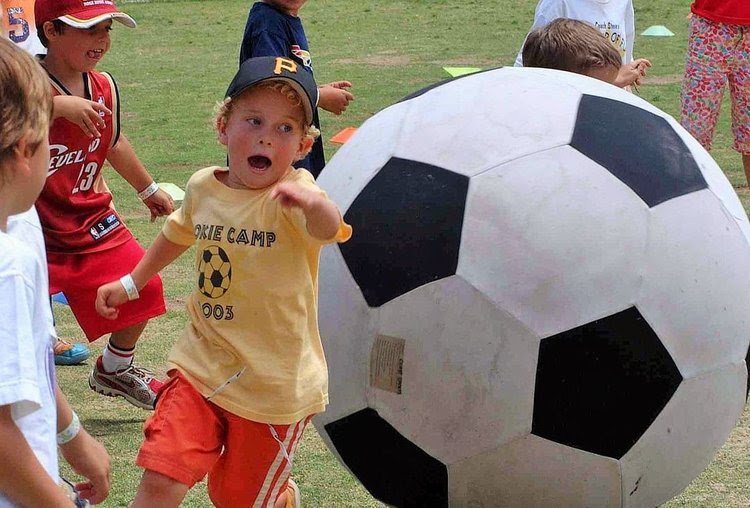
Fundamental to nearly all sports, especially the land-based variety, is the ability to run. We are born, we learn to crawl, and a fleeting moment later we are teetering on two feet. Once forward momentum has been established, we are off and running. Early efforts are marked by flailing arms, legs striking the ground awkwardly and a shaky, circuitous gait that implies vodka-spiked milk bottles. Forrest Gump, exploding out of his leg braces, provides one of the few examples of someone who was born to run. Few of the rest of us, fictional or real, are graced with a natural stride and proper mechanics. Most programs that introduce young kids to sports neglect this most critical skill as they focus on kicking or shooting or dribbling. But for sports to be enjoyed to the fullest, running technique must be taught. If not…
A few years ago, we had a kid at camp who was a lights out basketball player, one of the best eight year olds I’ve ever seen. He was a Houdini with the ball, able to escape the most octopus-armed defenders. His shot was both silky and lethal. And his awareness of the game was positively Kobe-ian. With the genetic bonus of six-foot-five parents, he was already choosing tattoos to adorn his arms and which shoe line to endorse. There was only one obstacle to his Hall of Fame selection: he couldn’t run. He would lumber down the court on his heels, leaden and clunky, looking like the ungainly giant fumbling to catch the nimble, beanstalk-climbing Jack. At eight, he could compensate with stiff, fast-moving legs. But what would he do at ten or twelve? By fifteen he’d be sure to have lower back problems, putting him on a collision course with a couch and a game controller, at best breaking records in NBA Street.
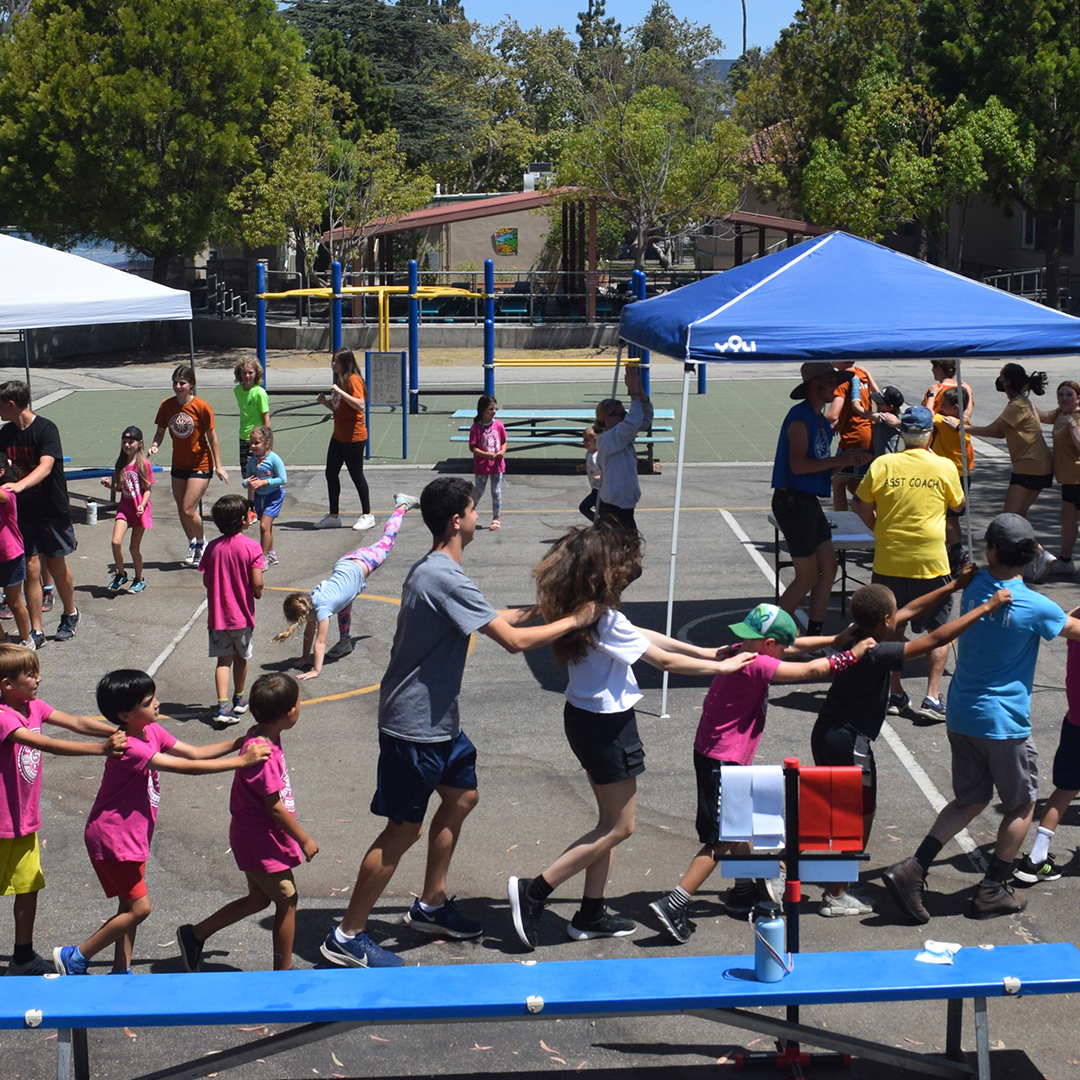
Running is neither hard to teach, nor difficult to learn. It’s more scrambled eggs than soufflé. We start with slow, exaggerated steps, showing how to use arms as pistons, pushing and pulling back and forth. We time our gait so that the left leg comes forward with the right arm. Once we’ve got the stride we lean forward into the balls of our feet and increase our pace from a brisk walk to a jog, maintaining form while we churn faster and faster until we find ourselves in a full-on sprint. We save the nuances and technical adjustments to an older age (though there are plenty of “professional” programs that would happily part you from your money to help shave seconds off your six year old’s times), but mastering the basics instantly increases kids’ enjoyment of games and sports. Isn’t that what it’s all about?
Whatever happened to that galumphing eight year old basketball prodigy? Happy to say that with diligence and commitment he rehabilitated his technique and was soon gliding gazelle-like up and down the court. But then life stepped in and made other plans. His older brother’s friend left a lacrosse stick at his house and within a few years his Air Jordans were gathering cobwebs under his bed. He had become an All-League attacking middie, a position that is all running all the time. Colleges back east beckoned and he answered the call. Unfortunately so did a trainload of other prospects and our boy was cut before the season. Not one to wallow, he embraced his school’s ivy-steeped tradition of racing around the quad in the snow in a clothing-optional state, breaking every dubious record in the book.
My crystal ball isn’t clear enough to predict whether your kid is going to mature into a Division 3 streaking champion – and wouldn’t you be so proud if he did – but to achieve even that level of proficiency (and infamy), the basics must be mastered. No matter how gently passes are embraced by a pair of hands, or how softly a foot can caress a pinged ball, or how far beyond the bounds of gravity a set of legs can leap, if the feet don’t fall and the arms don’t pump in perfect synchronization, you may as well be standing still. To play sports at the highest level, you’ve got to be able run before you can walk…